This company purports to provide investing services. It lists me on their website as part of their “management team.” I am not on their management team. In fact I’ve never had a communication with them, other than trying to get them to take me off their site. There are also some other notable AI and finance people listed. I won’t repeat their names here.
Over the last few months one law firm and two people have reached out to me to see if I am really associated with the company. I am not. One person reached out to me today to let me know that they were scamming his father.
I hope this post becomes searchable and will help prevent new people from being scammed.
With thanks to MV, YC, DB, WM, MH, and to Claude (Anthropic) and ChatGPT (OpenAI)
The problem: more papers than reviewers, and an AI echo chamber
Conference submissions are growing faster than the pool of qualified reviewers. Every program chair now faces the same arithmetic: more papers to evaluate, the same number of experts to evaluate them, and fewer hours of careful human attention per paper. Our review process has to spend that attention where it changes the outcome.
Generative AI makes the shortage worse while offering a tempting fix. Authors use AI to produce and submit more papers. Reviewers, overloaded, use AI to review them. If both sides lean on the same models, we converge on an equilibrium in which papers are acceptable but mediocre, because the models reward what resembles the corpus they were trained on, and novelty is limited by what has already been published.
Some conferences and journals respond by screening for and penalizing papers that appear to use generative AI. We disagree. AI detectors are unreliable, their false positives fall hardest on authors writing in a second language, and provenance is not what we care about. Quality is. The question for our community is how to use AI and people together so that we publish better papers, not more papers.
Our design principle is simple. AI focuses on decisions that have a checkable right answer: is the citation real, does the proof hold, is the dataset described. Humans handle judgment calls: is this interesting, does it matter. And a set of exceptions guarantees that a paper no AI model would rate highly can still reach a human reader.
A three-layer cascade
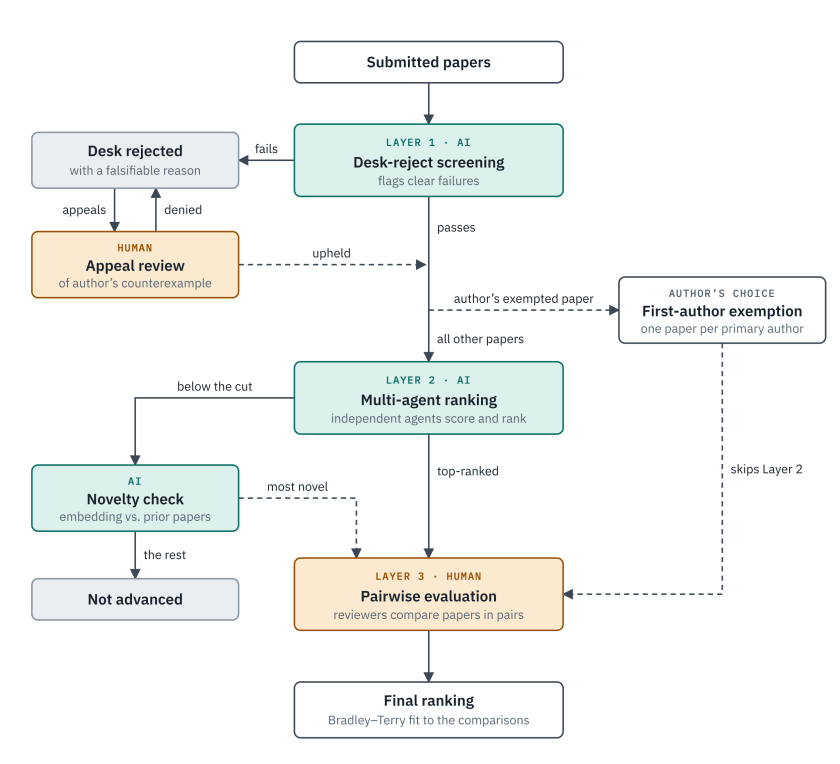
AI desk-reject screening. AI checks every submission against a fixed list of objective failures and rejects the clear cases.
Multi-agent AI ranking. Several independent AI agents evaluate, score, and rank the papers that survive desk-reject screening. The top-ranked papers advance to the last phase.
Human pairwise evaluation. Human attention is deliberately lightweight: Reviewers rank papers in pairs within their topic area. The comparisons are combined statistically into a final ranking using the Bradley-Terry algorithm.
More detail on each layer is described below.
Layer 1: AI desk-reject screening
Desk-reject screening checks a paper against a fixed, published list of objective failures. Each check is one a reader could verify in minutes: a cited paper that does not exist; a claim that the code or data is available when the link is dead; results tables whose numbers do not match the text; a proof with a gap at a specific step; text copied from a prior paper; a submission outside the conference’s scope.
The screener does not judge quality. It is not asked “is this a good paper” but “does this paper fail any of these checks,” and for each failure it must quote the specific evidence. Because every rejection cites checkable evidence, every rejection can be appealed with a counterexample, and a human decides the appeal.
Layer 2: Multi-agent AI ranking
Papers that pass desk-reject screening are evaluated by several AI agents built on different model families. Each agent scores and ranks the papers in a topic area independently. The ranks are combined, and the top papers in each area advance to human review. Disagreement among the agents is recorded, because it is a useful signal later (see the novelty exception).
Layer 3: Human pairwise evaluation
Human reviewers today assign absolute scores, such as 1 to 5. Those scores are known to be unreliable: the same paper scored by two committees lands on opposite sides of the acceptance line roughly half the time, and reviewers differ by a point or more in how harsh they are. Absolute scores also demand something a reviewer cannot do well, which is to hold the whole field’s distribution in their head and place one paper in it.
Comparison is easier and more consistent. Given two papers in the same area, a reviewer can say which makes the larger contribution far more reliably than they can say what either is worth in isolation. Reviewer harshness cancels out, since a harsh reviewer and a lenient one will usually agree on which of two papers is stronger even if they disagree on both scores. The individual comparisons are combined statistically, using the Bradley–Terry model.
Acceptance is already a comparison. A conference accepts a fixed fraction of what it receives, so every acceptance decision is implicitly “this paper over that one.” Pairwise evaluation makes that comparison explicit, and asks it directly of a person best placed to answer.
Isn’t this apples to oranges? Comparisons are only asked within a topic area, assigned by the same area-chair process that assigns reviewers today. A reviewer is never asked to compare a market-microstructure paper with a fraud-detection paper. Within an area, the question is the one an area chair already answers when deciding which borderline paper to take: which of these two advances the field more? Where a paper truly has no peers, which is rare, the area chair places it directly.
Reviewers are also not asked to compare two whole papers from scratch. Each reviewer receives a small batch of four or five papers in their area, orders them, and writes one sentence on each adjacent pair explaining the ordering. That is less work than writing four or five independent reviews, it yields more comparisons per hour of reading, and the sentences give every author feedback.
Exceptions and protections for authors
The cascade spends human attention on the papers the AI layers rank highest. The exceptions exist for the papers the AI layers would get wrong: unconventional work, work that departs from the published literature, and work rejected on a mistaken premise. Each one routes a paper back to a human.
First-author exception. Most authors submit one paper, and for them this exception means their paper goes directly to human ranking, bypassing the AI ranking entirely. Authors who submit several papers must choose one to protect. That choice is the point: it asks authors to signal which paper they stand behind, and it caps the number of papers that bypass the AI stage at one per author rather than one per submission. An author who believes a paper is unconventional, and therefore likely to be underrated by models trained on the existing literature, has a guaranteed route to a human reader for it.
Desk-reject appeals. Every desk rejection must state an explicit, falsifiable reason, such as a specific hallucinated citation. Authors can appeal only with a specific counterexample, which a human reviewer evaluates. A denied appeal returns the paper to desk rejection; an upheld appeal sends it on to the AI ranking.
Novelty exception. Papers that the AI ranking placed below the cut are given a second look for novelty, because models trained on the published literature will tend to underrate work that departs from it. Two signals are used. First, disagreement among the AI reviewers: when independent models give the same paper very different ranks, that is evidence the paper is hard to evaluate, which is exactly where human judgment adds the most. Second, distance from the literature: the paper’s embedding is compared with published work in the field, and papers far from any cluster are flagged. Neither signal alone is reliable, since an incoherent paper is also far from everything, so a paper must show both. The “top” flagged papers then proceed. The test’s purpose is to guarantee that unusual work reaches a human, not to reward unusualness for its own sake.
What this costs in human time
Suppose 1,500 submissions. Desk-reject screening removes 20%, leaving 1,200. The AI ranking advances the top third in each area, 400 papers, and the exceptions add perhaps 100 more, for 500 papers reaching human review. Each is read by three reviewers in batches of five, so 1,500 reads, or 300 reviewer batches: one batch each for a program committee of 300, or two each for a committee of 150. Under today’s process, 1,500 submissions with three reviews each would be 4,500 reviews. The human load falls by about two thirds, and every one of those reads is a comparison between papers that have already cleared the objective bar.
What authors get back
Every author receives: the result of each screening check, with the evidence if any failed; their paper’s AI rank band and the agents’ agreement or disagreement; and, if the paper reached human review, the sentences reviewers wrote comparing it with its neighbours. That is more specific feedback than most rejected papers receive today.
Open questions
Which model families should serve as the AI reviewers, and how do we keep authors from tuning papers to them?
How should the AI layers be validated before they decide anything?
Which models may see unpublished manuscripts, and under what confidentiality terms?
All these activities are a short walk from one another. You can visit all of them in a morning or afternoon. Anchor your visit with Mercer Labs, as you my have to commit to a specific time.
9/11 Memorial(free) Two reflecting pools sit in the footprints of the original Twin Towers, with the names of the victims inscribed in bronze around their edges. The outdoor memorial plaza is free to visit, while the adjoining 9/11 Museum requires a ticket. 911memorial.org
Trinity Church and Hamilton’s Grave(free) This historic Episcopal church stands at the head of Wall Street. Alexander Hamilton is buried in its churchyard, near his wife Eliza. trinitywallstreet.org
New York Stock Exchange(free) The exchange’s columned façade on Wall Street is one of the most photographed buildings in the city. The trading floor isn’t open to the public, so plan on seeing it from the street. nyse.com
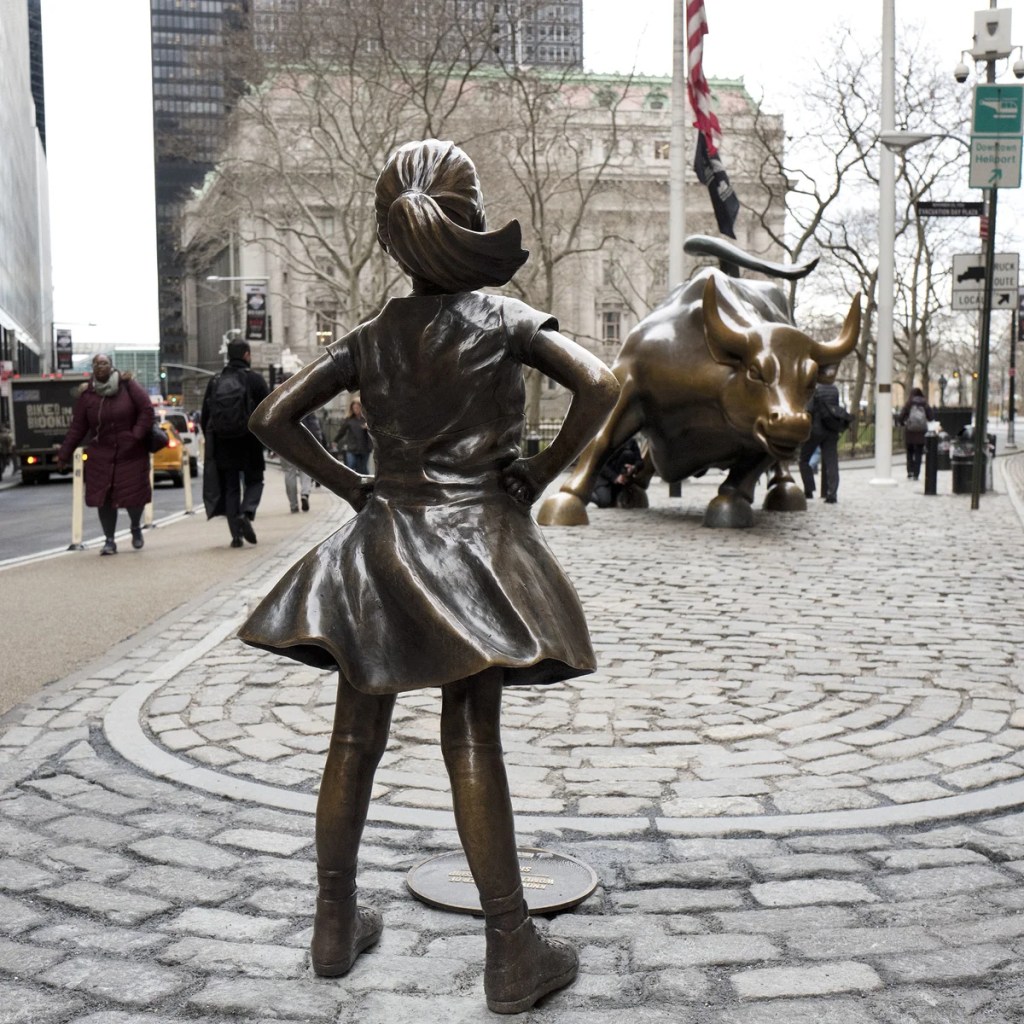
Fearless Girl(free) Kristen Visbal’s bronze statue of a defiant young girl first appeared across from Charging Bull in 2017. She now stands on Broad Street facing the New York Stock Exchange. State Street: Fearless Girl
Charging Bull(free) Arturo Di Modica created this bronze bull after the 1987 stock market crash and left it outside the stock exchange without permission in 1989. It now stands at Bowling Green, and there’s usually a line of people waiting for a photo. arturodimodica.com
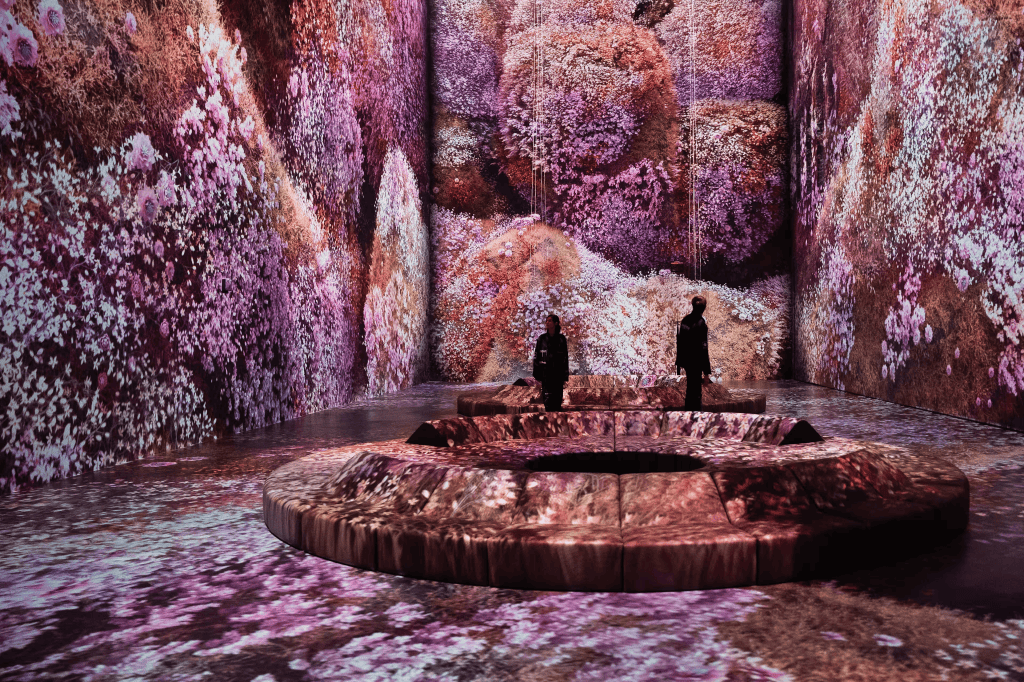
Mercer Labs($$) This museum of art and technology at 21 Dey Street fills fifteen rooms with immersive light, sound, and interactive installations. A fun, surreal visual experience. It’s a short walk from the 9/11 Memorial. mercerlabs.com
Trams, Trains and Boats
NYC Ferry from Wall St to 90th St($) For the price of a subway ride, the ferry carries you up the East River from Pier 11 at Wall Street to East 90th Street. You get skyline views of Manhattan, Brooklyn, and Queens along the way. ferry.nyc
Circle Line Cruises($$) Circle Line runs narrated sightseeing cruises from Pier 83 on the West Side, including trips around all of Manhattan. Several routes pass close by the Statue of Liberty. circleline.com
Day Trip 1: Train Ride along the Hudson from Penn Station to Hyde Park($$) Amtrak trains run up the east bank of the Hudson River, with beautiful views of the river and the Palisades. Get off at Poughkeepsie for a short ride to Hyde Park, home of FDR’s Springwood estate and Presidential Library. amtrak.com · FDR Home (National Park Service)
Day Trip 2: Take the Subway to Coney Island($) For the price of a subway fare, the D, F, N, or Q train takes you all the way to the end of the line at Coney Island–Stillwell Avenue in Brooklyn, about an hour from Midtown. Stroll the boardwalk and beach, then ride the Wonder Wheel (1920) and the wooden Cyclone roller coaster (1927), two classics that still thrill. Luna Park’s rides and the boardwalk are liveliest from spring through early fall, while the New York Aquarium is next door year-round. The original Nathan’s Famous is here too, but see our note in the Food section. lunaparknyc.com · coneyisland.com
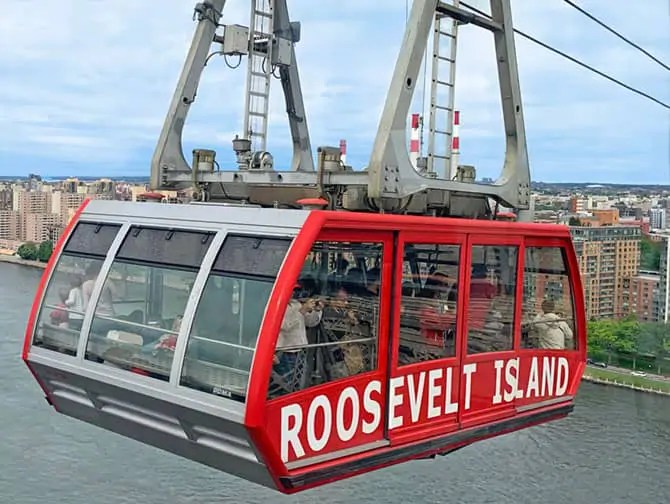
Visit Roosevelt Island by Tram($) The Roosevelt Island Tramway, an aerial gondola that has been gliding over the East River since 1976, leaves from Second Avenue at 59th Street and costs just a subway fare. The ride takes only a few minutes, but the views alongside the Queensboro Bridge and down the Manhattan skyline are spectacular. On the island, walk south to Franklin D. Roosevelt Four Freedoms State Park, Louis Kahn’s serene granite memorial at the island’s tip, which makes a nice bookend to the Hyde Park trip. Along the way you’ll pass the Gothic ruins of the old Smallpox Hospital and the Cornell Tech campus. For a different route back, take the F train or the NYC Ferry. Tucker Balch lived on this island for 5 years in the building formerly housing the New York City insane asylum. Roosevelt Island (RIOC) · fdr4freedoms.org
Midtown
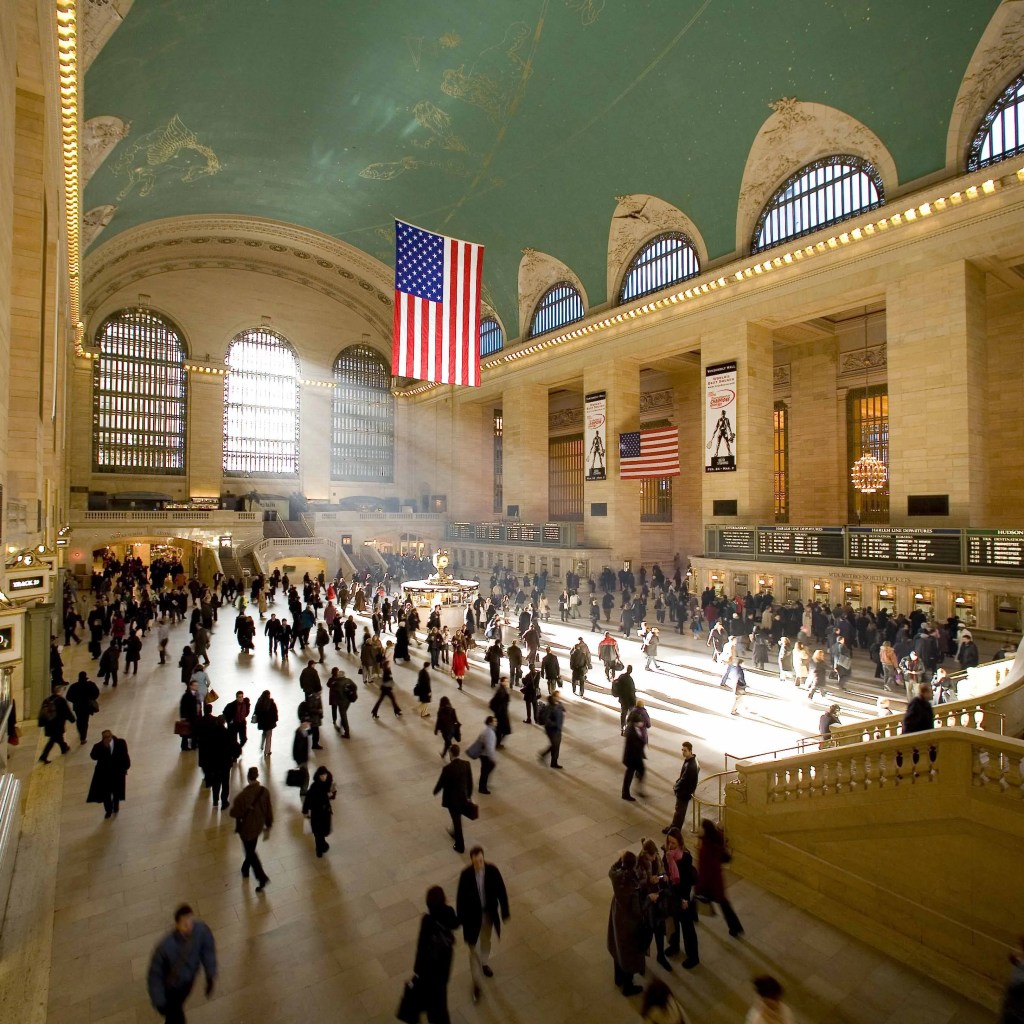
Grand Central Terminal(free) This Beaux-Arts landmark is a working rail station and an architectural showpiece. Look up at the celestial ceiling in the Main Concourse, then find the Whispering Gallery outside the Oyster Bar. grandcentralterminal.com
Times Square The neon heart of the theater district is busy at all hours. It’s at its most dazzling after dark, when the giant screens light up the whole intersection. timessquarenyc.org
The Diamond District West 47th Street between Fifth and Sixth Avenues is lined with thousands of independent jewelers and diamond dealers. Even if you’re just browsing, the street-level bustle is a slice of old New York commerce. For a taste of the district’s frantic energy before you go, watch the Safdie brothers’ 2019 thriller Uncut Gems, starring Adam Sandler as a fast-talking 47th Street jeweler with a gambling problem. diamonddistrict.org
Top of the Rock The observation deck atop 30 Rockefeller Plaza offers open-air views in every direction. Its best feature is that the Empire State Building and Central Park are both in your view. Tucker says that it is better to look AT the Empire State building from Top of the Rock than the other way around. rockefellercenter.com
NBC Studios Tour This guided tour of 30 Rockefeller Plaza goes behind the scenes at the home of shows like Saturday Night Live, NBC Nightly News, Jimmy Fallon. Book ahead, since tours often sell out. thetouratnbcstudios.com
Central Park
Strawberry Fields(free) This quiet corner of Central Park is a memorial to John Lennon, centered on the black-and-white “Imagine” mosaic. Enter at West 72nd Street, across from the Dakota, where Lennon lived. centralparknyc.org
Vistas
Top of the Rock($$) The observation deck atop 30 Rockefeller Plaza offers open-air views in every direction. Its best feature is that the Empire State Building and Central Park are both in your view. Go around sunset to see the city in daylight and then watch it light up. rockefellercenter.com
Entertainment
See a Broadway Musical($$$$) Nothing else quite matches a live show in one of the historic theaters around Times Square. For discounted same-day seats, try the TKTS booth in Duffy Square. broadway.org
NBC Studios Tour($$) This guided tour of 30 Rockefeller Plaza, the Comcast Building, goes behind the scenes at NBC’s longtime home, where shows like Saturday Night Live and The Tonight Show are made. Book ahead, since tours often sell out. The tour starts and ends at The Shop at NBC Studios, where you can pose at the TODAY desk and pick up merchandise from current hits and classics like The Office and Seinfeld. thetouratnbcstudios.com
Food
The top restaurants in NYC are expensive. Here are some good ones that are cheap to moderately priced:
The Oyster Bar($$) Grand Central’s Oyster Bar has served seafood since 1913, under its famous vaulted tile ceiling on the station’s lower level. It’s a remarkable setting with great and not too expensive food. Tucker recommends the clam chowder and the various forms of fried seafood. Save money by buying several appetizers to share. oysterbarny.com
Gray’s Papaya($) This no-frills counter at Broadway and 72nd Street serves some of the city’s best hot dogs, washed down with a papaya drink. It’s a few blocks from Strawberry Fields, so the two make an easy pair. grayspapaya.nyc
Hot Dog King($) In Tucker’s opinion, these are the best hot dogs in the world (after chili dogs at the Varsity in Atlanta). Dan Rossi’s carts have held court outside the Metropolitan Museum of Art on Fifth Avenue at 82nd Street for years. Get yours with spicy brown mustard, sauerkraut, and onions. Hot Dog King’s Extraordinary Story
Nathan’s Only listed here so you won’t be tempted. Tucker says to skip Nathan’s. Hot Dog King and Gray’s Papaya are better.
Zabar’s($$) This Upper West Side food emporium at Broadway and 80th Street began in 1934 as a smoked-fish counter and now fills nearly the entire block. It’s crowded, noisy, and wonderful, with aisles of coffee, olives, prepared foods, and fresh-baked rugelach, plus kitchenware upstairs. The cheese counter is enormous, ranging from familiar favorites to new artisanal cheeses, and the staff will often offer you a taste. The real draw is the appetizing counter, where skilled slicers hand-cut smoked salmon paper-thin to order: classic Nova, Scotch-cured, double-smoked, and salty belly lox, along with sable and whitefish. Pick up a bagel and some lox for a picnic, since it’s just a few blocks from the Museum of Natural History and Central Park. zabars.com
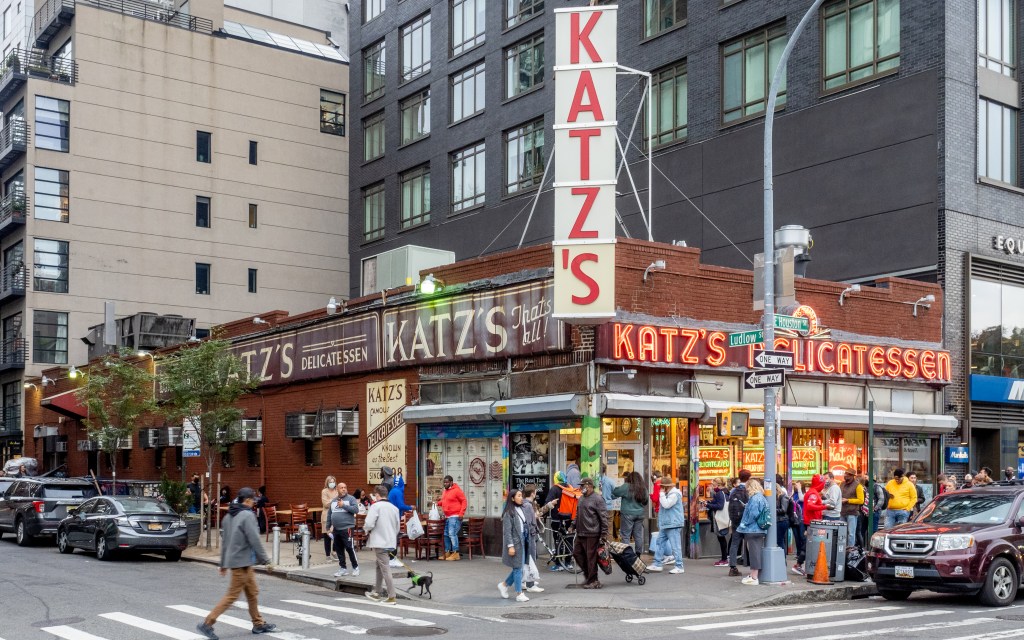
Katz’s Delicatessen($$) Open on East Houston Street since 1888, Katz’s is the classic New York Jewish deli, famous for hand-carved pastrami piled high on rye. Hold on to the ticket you’re handed at the door, since you’ll need it to pay on the way out. Yes, this is where Meg Ryan filmed the famous scene in When Harry Met Sally. katzsdelicatessen.com
Russ & Daughters($$) Joel Russ started out selling herring from a pushcart, and the family has run this Lower East Side “appetizing” shop since 1914, at 179 East Houston Street since 1920. Take a number and order a bagel with lox and cream cheese, or try the smoked fish, caviar, and babka. For a sit-down meal, the Russ & Daughters Cafe is a couple of blocks away at 127 Orchard Street. Katz’s is just down the block, so you can do both. russanddaughters.com
Skirt Steak($$) Chef Laurent Tourondel, founder of the BLT restaurants, does just one thing here: a fixed-price meal of prime skirt steak with béarnaise, a green salad, and unlimited hand-cut fries. Save room for the dessert cart. It’s at Sixth Avenue and 29th Street in Chelsea, close to Penn Station, and it’s walk-in only except for parties of seven or more. skirtsteaknyc.com
Museums
NYC hosts some of the most iconic museums in the world. If you are a student, bring your ID because they all have student discounts. Here’s Tucker’s list:
The Metropolitan Museum of Art ($$) The Met on Fifth Avenue is one of the world’s great museums, covering 5,000 years of art from Egyptian temples to European masters and American period rooms. Adult admission is $30 for out-of-state visitors, while New York State residents can pay what they wish. Tucker’s favorites: The impressionists’ galleries, and the musical instruments section which includes Ringo Starr’s iconic drums. Afterward, grab lunch from the Hot Dog King’s cart out front. Also visit the art for sale outside on the sidewalk. metmuseum.org
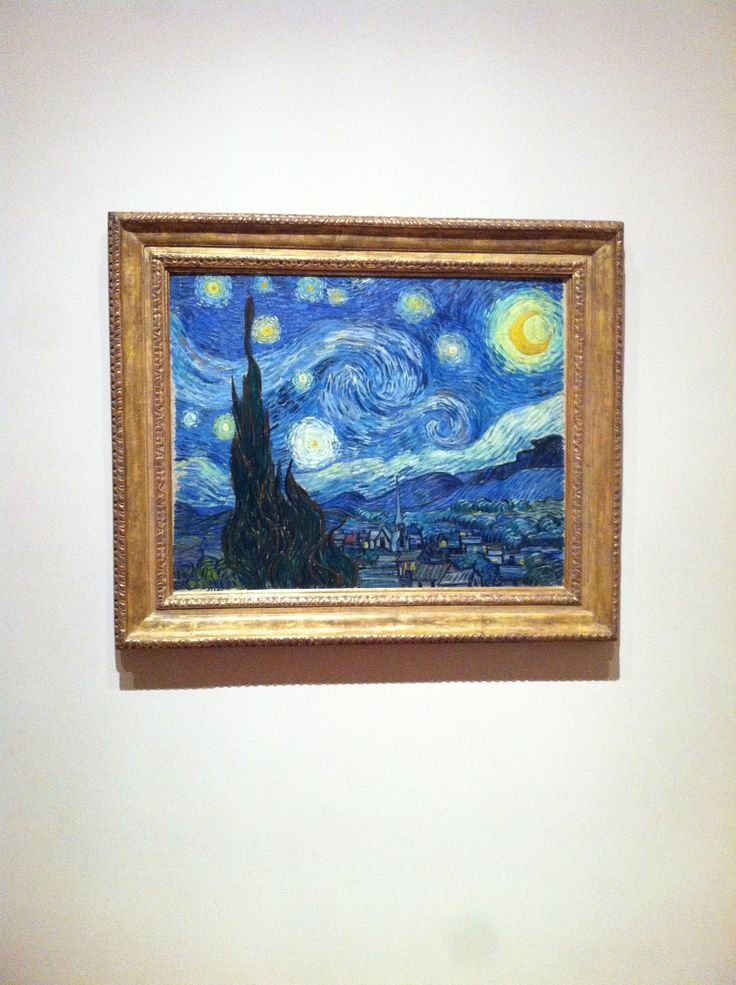
Museum of Modern Art (MoMA)($$) MoMA, on West 53rd Street in Midtown, holds landmark works by Van Gogh, Picasso, Monet, Warhol, and many others, alongside design, film, and photography galleries. Don’t miss the MoMA Design Store. You don’t need a museum ticket to visit it, and there are two locations: one across the street at 44 West 53rd Street, and a second in SoHo at 81 Spring Street, which reopened in 2025 after a full redesign. moma.org · MoMA Design Stores
American Museum of Natural History($$) Across Central Park West from the park at 79th Street, this museum is famous for its dinosaur halls, the giant blue whale in the Hall of Ocean Life, and the Hayden Planetarium in the Rose Center. It’s a short walk from Strawberry Fields and Gray’s Papaya, so the three make an easy Upper West Side afternoon. amnh.org
Shopping
Walk South on Fifth Avenue(free to browse) Start at the gilded statue of General William Tecumseh Sherman in Grand Army Plaza, at Fifth Avenue and 59th Street by the southeast corner of Central Park. Across the avenue is the glass cube of Apple Fifth Avenue, and on the west side is the department store Bergdorf Goodman. At 57th Street you’ll find Tiffany & Co.’s renovated flagship, “The Landmark,” and Louis Vuitton’s old flagship wrapped in a tower of giant monogrammed trunks while it is rebuilt. LV’s five-story temporary store, with its own café and chocolate shop, is just around the corner at 6 East 57th Street. Continue past Cartier’s mansion at 52nd Street to St. Patrick’s Cathedral and Saks Fifth Avenue, across from Rockefeller Center. Duck into Rockefeller Center for FAO Schwarz, with its toy soldiers and the giant floor piano from the movie Big, and then finish at the New York Public Library’s stone lions at 42nd Street. rockefellercenter.com · faoschwarz.com
FAO Schwarz(free to enter) America’s oldest toy store left its longtime Fifth Avenue home in 2015 and reopened in 2018 at 30 Rockefeller Plaza, on 49th Street. Toy soldiers greet you at the door, and inside are the famous clock tower and the giant floor piano you can dance on, like Tom Hanks in Big. It’s a delight for kids and grown-ups alike. faoschwarz.com
Nintendo NY(free to enter) Nintendo’s two-level flagship store sits at 10 Rockefeller Plaza, on 48th Street between Fifth and Sixth Avenues. You can try the newest Switch games on demo stations, shop exclusive merchandise featuring Mario, Zelda, and Pokémon, and browse a display of Nintendo consoles through the years. nintendo.com
MoMA Design Stores(free to enter) You don’t need a museum ticket to shop at either MoMA Design Store. The Midtown store is directly across the street from the museum at 44 West 53rd Street, just off Fifth Avenue, so it fits easily into your Fifth Avenue walk. The SoHo store at 81 Spring Street reopened in 2025 after a top-to-bottom redesign. Both are full of clever, beautifully designed gifts, from housewares and lighting to toys, books, and stationery. store.moma.org
The Met Store and the Natural History Museum Shops Vendors sell their own art outside the Met on the sidewalk (no entry fee). The Met’s main store sits just off the Great Hall and is packed with jewelry, prints, books, and home décor inspired by the collection. The American Museum of Natural History has a three-level main Museum Shop, plus a Planetarium Shop full of meteorites, gems, and space gifts. These shops are inside the museums, so you may have to pay the entrance fee to reach them. Both museums also sell online. store.metmuseum.org · AMNH Shops
The Shop at NBC Studios Inside 30 Rockefeller Plaza, the Comcast Building, this store is stocked with merchandise from Saturday Night Live, The Tonight Show, and classics like The Office, Friends, and Seinfeld. It’s also where the NBC Studios Tour starts and ends. thetouratnbcstudios.com
JPMorganChase Shop at 270 Park Avenue JPMorganChase’s new 60-story global headquarters opened in October 2025 on the block between Park and Madison Avenues and 47th and 48th Streets, a short walk north of Grand Central. Inside is a company shop selling JPMorganChase-branded gear. The building itself is not fully open to the public, so you may need to go with someone who works there. jpmorganchase.com
Background: Overall, I’m quite satisfied with how well Suwanee is administered. My family loves being here, and I feel that the mayor and council members are doing a great job. However, to advance Suwanee, Gwinnett, and Atlanta to the next level we really need to address transportation. As far as I am concerned, this is the issue. I sent each of the 2025 candidates for city council, the following email (abbreviated), and here are their responses.
[I commuted to NYC for 5 years, and their transportation is awesome] … I’m disappointed that the Atlanta area suffers from such poor public transportation. Our region would be so much better if we only had rail connecting us to Atlanta and her suburbs. In my view, making that happen is the most important contribution our local leaders can make.
Can you tell me your opinions on this? And concretely, what have you done (and what will you do) to advance Suwanee’s, Gwinnett’s and Atlanta’s transportation infrastructure?
Linnea Miller (incumbent, Post 3):
I apologize for the delay in getting back to you with my response. I’m sure you can imagine that it’s been a really busy season. Thank you for your service on our ZBA, and for your concern regarding a topic that affects all of us on a daily basis… mobility, more specifically transportation infrastructure. I like to think about this topic under the broader framework of mobility because every person in Suwanee and our region has a real need to get from here to there, and most are frustrated on a daily basis with traffic congestion, and the limited options our region has to move around the 23k people in Suwaee, the one million people in Gwinnett and the more than 6 million in the ATL metro area.
As a municipal leader, representing Suwanee, I like to first prioritize mobility solutions that are within our local control. This includes planning for and funding sidewalks, bike lanes, greenways, etc. The City has currently undertaken a study with funding from the ARC called the “Suwanee Loop Study”. This plan identifies gaps and opportunities to better connect the community using our existing infrastructure and identifying future projects that would enhance connectivity throughout the city. We are also intentional with planning for local roads and connections wherever possible. We require new development in Suwanee to enhance the city’s connectivity through creating local connectors in neighborhoods and larger business developments, while also providing sidewalks and other amenities that enhance the local community’s ability to travel throughout the city. We also identify road improvement projects that enhance traffic flow where possible.
Next I like to think about partnerships. These partnerships with Gwinnett County and the State of Georgia are crucial to tackling the more complex and bigger issues related to mobility. We have a great partnership with Gwinnett County DOT, and we often work with them to do joint projects throughout the city. These include improvements to sidewalks and roads and signaling along the county streets and collectors in the city. We work with the State on funding and undertaking projects such as the “Better Buford Hwy” and interstate improvements, most recently the 85 McGinnis Ferry ramp that is currently under construction. We always advocate for more projects and more expediency in implementation, but sometimes these improvements take years to implement.
This leads to the topic that I think is the main concern of your inquiry, and that is public transportation or transit. As I mentioned earlier, the metro area has more than 6 million people, and Gwinnett has 1 million alone. We need more and better public transportation options. We currently have a county-run bus route and limited paratransit. I believe that Suwanee & Sugar Hill are next on the county’s list for micro transit. Some of the planned funding for that would’ve come from an approval of the county’s last transit referendum, and when that failed I think it has slowed some planned implementation. I am interested in reaching out to the county to learn when and where we are on bringing micro transit to Suwanee because I think it would be a well used resource for many including seniors in the city. Speaking of the transit referendum, as you know it failed by a narrow margin. Frankly, that was disappointing to me. In 2019 & 2020 I served on the Gwinnett County Transit Committee where we studied and made recommendations to the county that influenced the county’s approach to the transit plan. That plan had the unfortunate timing of coming before the public in a referendum during the pandemic. The county then revised and adopted a new plan for which funding through a SPLOST referendum also failed in 2024. I believe that we need to continue to work toward a dedicated funding source that we can get public support for to fund public transportation and transit. We need to consider everything from our relationship to MARTA and the public’s concerns regarding cost, safety and experience. We need to also consider diverse transit modalities like Bus Rapid Transit, and new & emerging technologies like high-speed rail, as these infrastructure improvements often take years or decades to implement. Our county leadership recognizes the need, and I respect that they continue to work hard toward the goal of providing better public transportation while continuing to try to win public support.
Personally, I serve in regional and state leadership roles with Gwinnett Municipal Association, and specifically on the Legislative Policy Council which allows me to advocate with our state legislators on broad topics, transportation being one of our focus areas. Lastly, Suwanee is currently undertaking a long-term strategic planning initiative called, Vision 2040. We are inviting the community to participate in citizen roundtables so that their input can shape our 15 planning horizon. Sign ups have been extended until November 5. We’d love to have at least 300 people participate. I hope you’ll consider this opportunity. These plans are critical to guiding leadership decision-making for elected officials and our staff.
Thank you for allowing me the opportunity to share my perspective, experience and leadership on the topic of mobility. Please feel to reach out with any further questions. I’m always happy to be of assistance.
In service,
Brittany Wolfe (challenger, Post 3):
Thank you for reaching out. I couldn’t agree more with you regarding our metropolitan area’s failed attempt at a robust public transportation system, after living in DC and San Francisco myself and traveling to Europe many times I have also come to admire and long for the systems they have in place.
In order to get that here in Suwanee we would of course need to connect Marta up here, I understand it has been a project under consideration, however I do not know enough details on the project to be able to tell you what my support of it would look like. I would first need to understand costs that would be placed on our citizens, traffic impacts for building it, etc. I am by no means saying I am against it, but you have my word that if elected I would push for proper research to see what is possible and what it would take to make it happen.
Your question on what have I done – nothing yet as this is my first time running for office. Another thing I believe we can do better with though is connecting sidewalks for better pedestrian traffic around our city and at least providing more local buses, especially for the elderly.
Hope this helps and I’m happy to chat via phone anytime. Thanks again for reaching out and I hope to gain your support!
Beth Hilscher (incumbent, Post 4):
Thank you for reaching out. I almost missed your message –you’re the first person who’s contacted me (I assume through my website). Thank you also for your service on the Zoning Board of Appeals. I imagine you saw much more activity on the ZBA back in the mid-2000s than the board sees today. Regarding our lack of rail transportation, I don’t disagree with your sentiment. Georgia is way behind the eight ball when it comes to regional transportation. Like you, I’ve used public rail transportation in major cities and the high quality European rail systems. Unfortunately, our region hasn’t kept pace and we’re feeling the consequences. While my own commute is fantastic, I can sometimes ride my bike to the office, the lack of regional transportation often makes me think twice about heading into Atlanta for events or meetings. The region’s plan for Bus Rapid Transit routes is a start, but expanded rail service would be far superior. With advancing technology, I’m hopeful that high-speed rail projects, like the proposed Atlanta-to-Charlotte line (with a stop through Athens, now under GDOT study) and others like it will eventually become a reality.
With regard to your question about my direct actions, I’ve served in regional roles to ensure Suwanee’s voice remains part of the broader transportation conversation. I currently serve on both the Gwinnett Municipal Association Executive Board and the Explore Gwinnett Board of Directors. Our Mayor, who also serves as Vice President of the Georgia Municipal Association, sits on multiple GMA policy committees, and Councilmember Linnea Miller serves on the Gwinnett Transit Advisory Board (among other regional boards and committees). I’ve also supported preserving the Suwanee Station rail corridor and ensuring the City remains competitive in securing transportation-related and community improvement grants. We are actively involved in regional transportation discussions (all while holding full-time jobs outside of City Council–none of these board positions are paid positions) and we’re committed to ensuring that Suwanee holds an important seat at the table. Personally, I’m also committed to continuing my education and staying informed on trends, technologies, and best practices related to these and other city matters.
Finally, while I tend to lean more conservatively regarding public spending, I do believe that partnerships and investment in long-term transportation improvements are essential to the City’s continued success. Fortunately, Suwanee has an exceptional professional staff who ensure we maximize every funding opportunity available. They truly are one of the best teams in the state and it’s one of the primary reasons I wish to continue serving on Council. I know what we have and I don’t want to risk losing it under contrary leadership.
One last thing…our City is currently undergoing a long-term master planning initiative and is seeking community participation in roundtable discussions with other residents to help shape Suwanee’s vision for the next 15 years. I’d encourage you to consider participating. It’s not a long-term commitment — just a few roundtable sessions where your perspective and experience would be very valuable.
Thank you again for your message. If you have any other questions about my priorities or reasons for seeking re-election, please don’t hesitate to reach out.
David Martinez (challenger, Post 4):
I appreciate your questions. Please give me a call so I may address your concerns.
[I was able to speak to Mr. Martinez on the phone on the issue. His view is that he supports improving transportation options for Suwanee, but he wants to be sure they make sense economically.]
Ted Rollins (challenger, Post 4):
No response as of October 29, 2025.
Pete Charpentier (incumbent, Post 5):
Appreciate your email and I understand your comments. I have also traveled to NYC and other cities in Europe with considerable mass transit.
I actually also commuted downtown to NCR for several years.
The City of Suwanee added a bus line last year to provide connectivity to the Gwinnett County transit system. In addition, there was a Gwinnett County transportation referendum presented to voters last year. It was a comprehensive program that did not pass. There are also Gwinnett County commuter buses that run today from select locations and travel downtown.
I personally am in favor of transportation options that could alleviate traffic and provide options as long as they make sense financially. I work with Gwinnett County and provide input regarding needs. Suwanee does not have any direct mass transit options as we rely on county and state options.
T. Nicole Linder (challenger, Post 5):
No response, but to be fair, I don’t even know how to contact her. I’m unable to find a contact address for her. She does not seem to have an internet footprint. Happy to reach out if you can connect me.